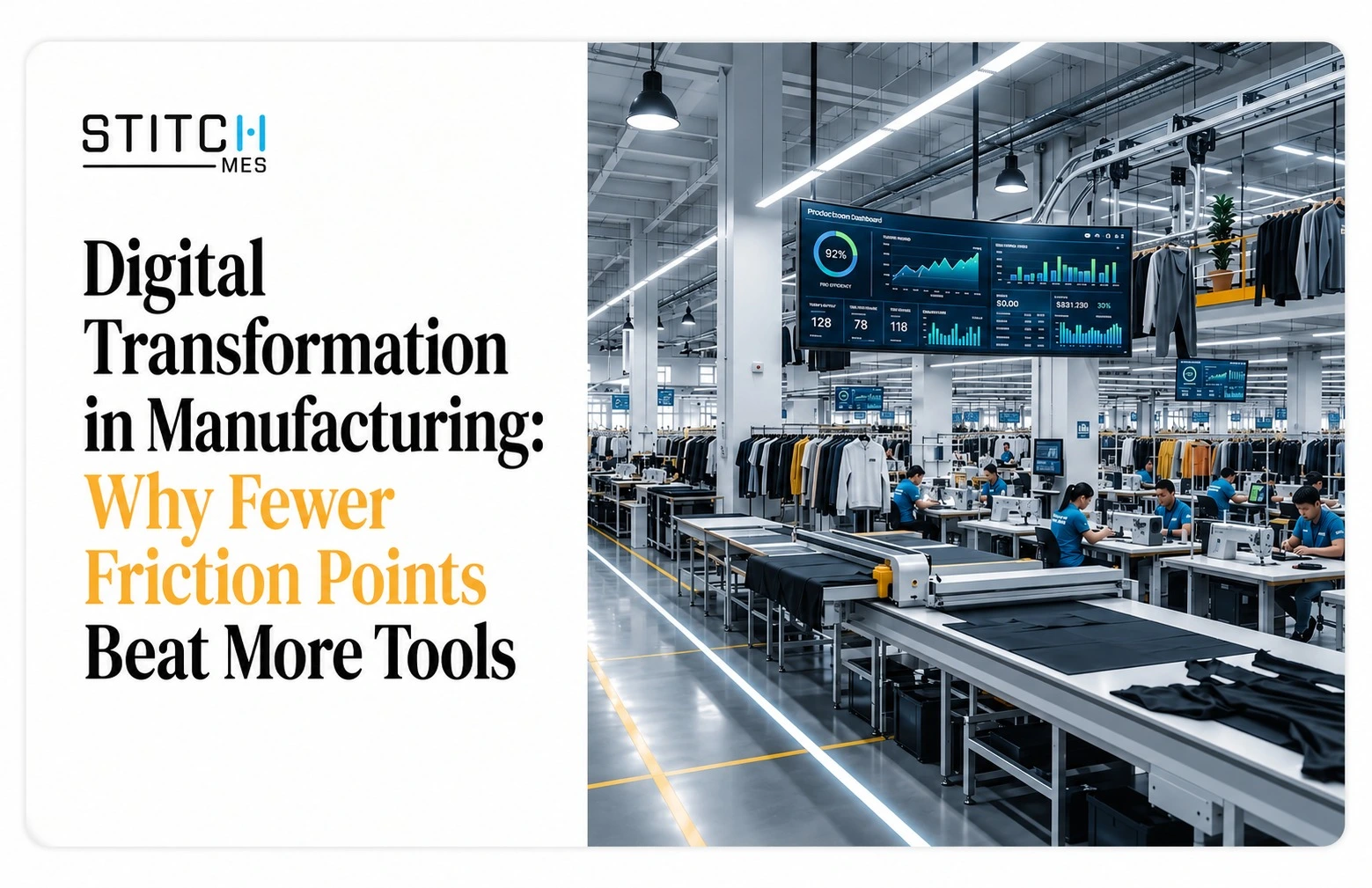
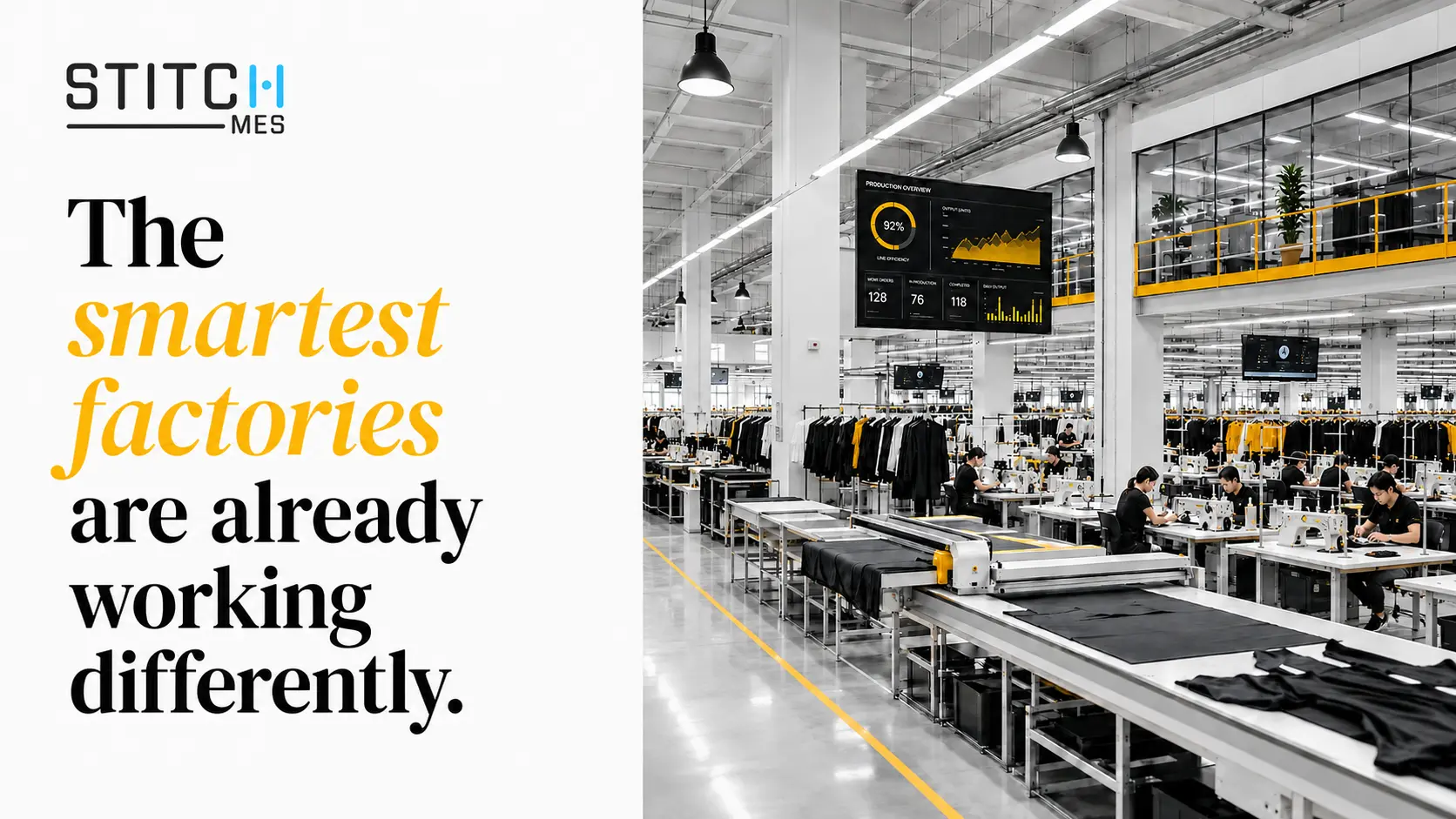
In apparel manufacturing, the word “smart factory” is often misunderstood.
Many people imagine a smart factory as a futuristic setup filled with robots, automated machines, artificial intelligence, and large digital screens everywhere. But in reality, the smartest factories are not necessarily the ones with the most machines or the most software tools.
The smartest factories are the ones that work differently.
They make faster decisions.
They see problems earlier.
They connect departments better.
They reduce dependency on manual follow-ups.
They convert factory activity into real-time intelligence.
That is the real transformation.
The Old Way of Working Is Slowing Factories Down
For years, apparel factories have operated with a familiar rhythm.
Production data is collected manually.
Quality reports are prepared after the issue has already happened.
Cutting status is followed up through phone calls.
Finishing delays are discovered late.
Planning teams depend on Excel sheets.
Management gets reports after the day is almost over.
This style of working may have been acceptable when lead times were longer and customers were less demanding. But today, the market has changed.
Buyers want shorter lead times.
Orders are more fragmented.
Style changes are frequent.
Margins are tighter.
Compliance expectations are higher.
And factories are expected to deliver speed, transparency, and consistency at the same time.
In this environment, a factory cannot afford to run on yesterday’s information.
Smart Factories Are Not About More Software
One of the biggest mistakes manufacturers make is thinking digital transformation means adding another software tool.
A planning tool here.
A quality app there.
A production tracker somewhere else.
Another dashboard for management.
But if these systems do not talk to each other, they simply create new layers of complexity. Teams still work in silos. Data still needs to be reconciled. Managers still need to ask multiple people for the same answer.
That is not digital transformation.
That is digital clutter.
A smart factory is not built by adding more disconnected tools. It is built by creating one connected operating system where production, quality, cutting, finishing, planning, maintenance, warehouse, and management teams work from the same real-time source of truth.
The goal is not more software.
The goal is fewer blind spots.
Real-Time Visibility Changes Factory Behavior
The biggest difference between a traditional factory and a smart factory is visibility.
In a traditional factory, problems are often discovered late.
A line is underperforming, but the issue is visible only at the end of the shift.
A quality defect is increasing, but the trend is noticed after multiple pieces are affected.
Cutting is delayed, but production realizes it only when feeding becomes a problem.
Finishing is overloaded, but the bottleneck becomes visible close to shipment.
In a smart factory, these signals are captured as they happen.
Line efficiency is visible in real time.
WIP movement is tracked across departments.
Quality defects are recorded at the source.
Production gaps are highlighted immediately.
Deviation alerts are sent before the issue becomes a crisis.
This changes the behavior of the factory.
Supervisors act faster.
Managers intervene earlier.
Planning teams adjust better.
Quality teams identify root causes sooner.
Top management gets facts instead of assumptions.
Real-time visibility does not just improve reporting.
It improves response.
Data Must Move from Reporting to Decision-Making
Many factories already collect data. The problem is that the data is often used only for reporting.
Reports are prepared.
Emails are sent.
Meetings are held.
Numbers are reviewed.
But by the time the information reaches decision-makers, the opportunity to act may already be gone.
The smartest factories use data differently.
They do not treat data as a record of what happened yesterday.
They use data as a live signal of what needs attention now.
For example, if a line is expected to miss the end-of-day target, the system should not wait for the final output report. It should highlight the risk during the day.
If a specific defect is increasing in a particular line, buyer, style, or operation, the quality team should know immediately.
If material feeding is likely to delay production, the planning and warehouse teams should see it before the line stops.
This is where digital transformation becomes powerful.
Not when data is collected.
But when data starts guiding action.
A Smart Factory Is Also a People Strategy
Technology alone does not make a factory smart.
People do.
A smart factory needs operators, supervisors, quality checkers, IE teams, planners, production managers, and leadership teams to work with a new mindset.
The shift is from follow-up to visibility.
From blame to facts.
From delayed reporting to live action.
From department-level thinking to connected execution.
This is why digital transformation should not be treated only as an IT project. It is a business operating model change.
The question is not only, “Which software should we buy?”
The bigger question is:
How should our factory work when everyone has access to the right information at the right time?
That is the foundation of a digital workforce strategy.
The Role of MES in a Smart Apparel Factory
In apparel manufacturing, a Manufacturing Execution System plays a central role in this transformation.
An MES connects what is planned with what is actually happening on the factory floor.
It brings together critical factory functions such as:
Production tracking
Quality management
Cutting and fabric control
Finishing and packing
Warehouse movement
Line performance
WIP visibility
Real-time dashboards
Alerts and analytics
Management reporting
When these functions are connected, the factory becomes more transparent and controllable.
Management no longer needs to wait for manual updates.
Supervisors no longer depend only on verbal follow-ups.
Quality teams can track issues with evidence.
Planning teams can see actual progress.
Customers can get better visibility.
Factory teams can work with facts.
This is how a factory starts working differently.
The Future Belongs to Responsive Factories
In the coming years, apparel manufacturing will become even more demanding.
Factories will need to handle smaller order quantities, faster style changes, tighter delivery windows, stricter compliance requirements, and stronger pressure on cost and efficiency.
The factories that survive and grow will not only be the ones with capacity.
They will be the ones with responsiveness.
The ability to see.
The ability to decide.
The ability to act.
The ability to correct.
The ability to learn.
That is what defines a smart factory.
Conclusion
The smartest factories are not waiting for digital transformation to become mandatory.
They are already changing the way they work.
They are moving from manual updates to real-time visibility.
From isolated departments to connected execution.
From delayed reporting to proactive action.
From assumptions to intelligence.
From firefighting to control.
In apparel manufacturing, this is no longer a future ambition.
It is becoming the new operating discipline.
Because the factories that work differently today will be the ones that lead tomorrow.